Kitchen Backsplash Tile Installation in Colorado Springs, CO
Subway, herringbone, mosaic and large-format backsplashes with straight lines, clean cuts and tidy edges, installed by a local tile setter with more than 20 years of experience.
A Backsplash That Looks Right Up Close
A backsplash sits at eye level, a couple of feet from your face, every time you cook or wash dishes. A floor can hide a slightly off cut. A backsplash can't. Wavy grout lines, chipped edges around outlets and unfinished ends at the cabinets jump out. We take the time on layout and cuts so the finished wall looks clean from any angle.
- Classic and handmade-look subway tile
- Herringbone, chevron and vertical stack patterns
- Glass, stone and porcelain mosaic sheets
- Large-format porcelain with few grout lines
- Outlet box extenders and clean cuts at switches
- Metal edge trim and finished ends
- Full-height tile behind ranges and hoods
Choosing Your Backsplash Tile
Start with the countertop and cabinets, since they cover far more of the kitchen. The backsplash should either quietly support them or be the one bold thing in the room, not compete with a busy granite.
Subway tile
The 3x6 subway is popular for a reason: it's clean, easy to find in dozens of colors and works in almost any kitchen. Longer formats like 2x8 or 4x12 feel more modern. A half offset is the traditional look, a one-third offset suits longer tiles better, and a straight stack reads as contemporary. Handmade-look subway tile has wavy edges and color variation that hide small wall imperfections well.
Herringbone and chevron
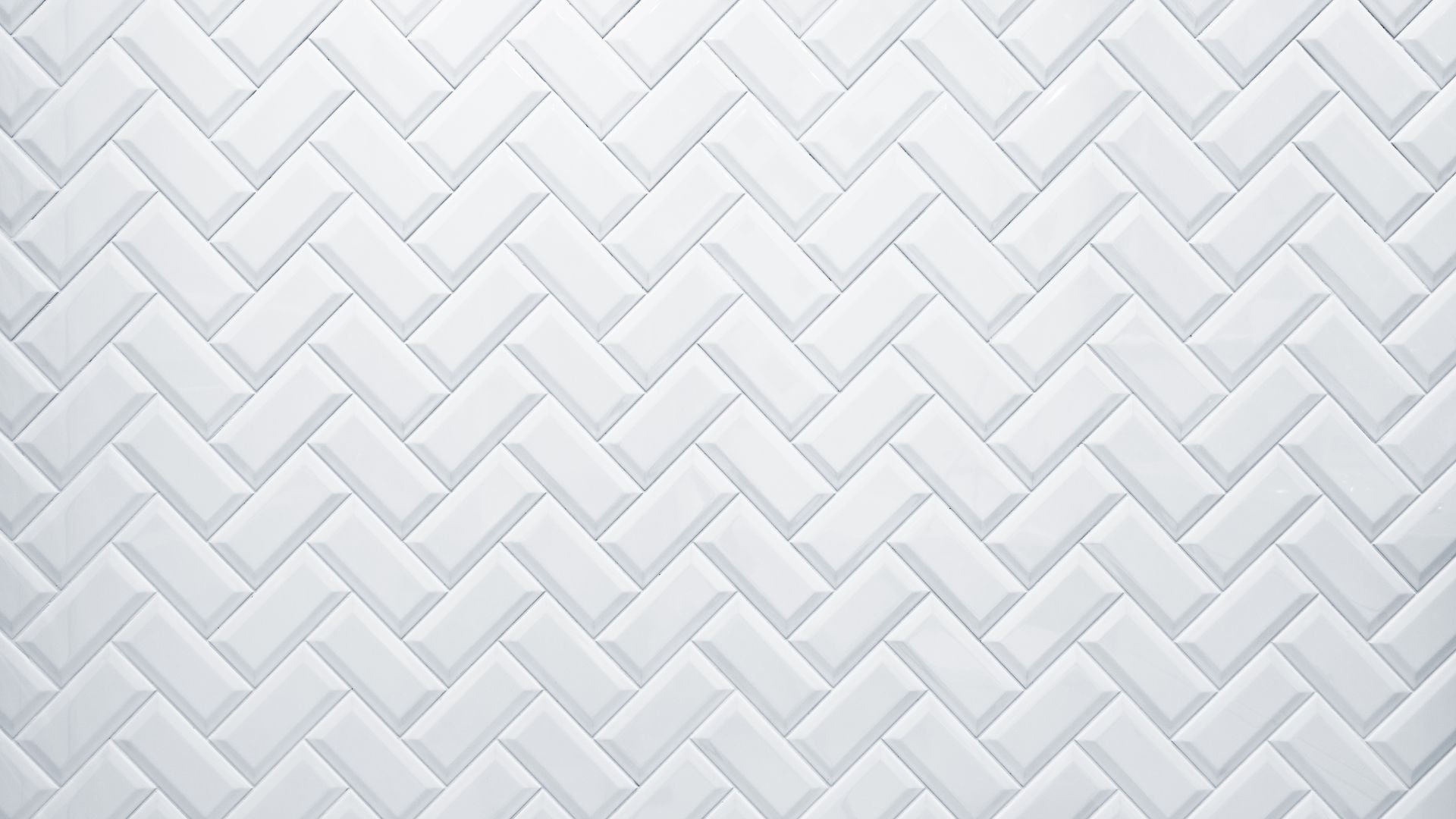
Herringbone uses standard rectangular tiles set at right angles in a zigzag. Chevron uses tiles cut on an angle so the points meet in a clean V. Both create movement, and both involve a lot more cutting than a straight layout, so they take longer to install. We center the pattern on the range or sink so the point lines up where your eye lands.
Mosaics
Mosaic sheets in glass, marble or porcelain add texture, but they show every flaw in the wall and in the setting. Glass mosaics need white thinset so the color doesn't show through, and marble mosaics need sealing before and after grouting.
Large-format tile
Big porcelain tiles mean fewer grout lines and a backsplash that wipes down in seconds. The trade-off is that kitchen walls are rarely flat, and a large tile will rock over every bump. We check the wall with a straightedge first and float out any low spots before setting.
The Details That Make or Break a Backsplash
- Layout from the focal point. We plan from the range or sink outward, so the cut pieces end up at the cabinet ends and corners instead of in the middle of the wall.
- Outlets and switches. With the breaker off, we cut tile tight around each box and add box extenders so devices and cover plates sit flush with the tile instead of sinking behind it.
- Finished edges. Where the tile stops in mid-air, at the end of an upper cabinet or partway along a wall, we finish it with a metal edge profile (often called Schluter trim) or a bullnose piece, never a raw cut edge.
- The countertop joint. The line where tile meets the counter gets flexible caulk, not grout. Counters and walls move separately, and grout in that joint cracks.
- Behind the range. This spot takes the most heat and grease. Running tile up to the hood or ceiling here protects the wall and gives the kitchen a focal point.
Grout and Sealing
Kitchen grout lives a hard life. Bright white grout looks crisp on day one and can turn dingy near the stove within a year. Stain-resistant grouts, like epoxy, urethane and high-performance cement grouts, hold their color much better, and a mid-tone grey hides more than pure white. Standard cement grout and natural stone should be sealed. We'll recommend the right combination for your tile and how you cook.
What to Expect When We Tile Your Backsplash
Clear the counters and we'll take care of the rest. We cover the countertops and range, shut off power to the outlets we're working around, and prep the wall. The tile is set first, and once the thinset has cured we come back to grout, caulk and seal. Your kitchen stays usable between visits.
Updating more than the wall? We can carry the project down to the floor with new tile flooring or waterproof LVP, and our gallery has ideas to get you started.
Questions? Call (719) 352-5910 or email pdtileandfloors@gmail.com with a photo of your kitchen.
Backsplash Installation FAQs
Can you install a backsplash over drywall or old tile?
Painted drywall that's solid and flat is a fine base for a kitchen backsplash once glossy paint is scuffed and the wall is cleaned. Old tile can sometimes stay if it's well bonded and flat, but it adds thickness at outlets and exposed edges, so removing it often gives a cleaner result. We'll check your walls at the estimate.
How long does backsplash installation take?
It depends on the size of the area, the tile and the pattern. Herringbone and small mosaics take longer than a straight subway layout. Setting and grouting usually happen on separate visits because the thinset has to cure in between. You'll get a timeline with your free estimate.
What do you do about outlets and switches?
With the power turned off at the breaker, we remove the cover plates, cut the tile around each box and install box extenders so the outlets sit flush with the new tile surface. The cover plates then cover the cut edges neatly.
Should the tile go all the way to the ceiling or behind the range?
That's a design choice. Most backsplashes stop at the underside of the upper cabinets. Behind a range, especially with an open hood or no cabinet above, running tile up to the hood or ceiling protects the wall from splatter and makes a nice focal point.
What grout is best for a kitchen backsplash?
Kitchens deal with grease, sauce and coffee, so stain resistance matters. Epoxy, urethane and high-performance cement grouts all resist stains better than basic sanded grout, and slightly darker colors hide more. Standard cement grout should be sealed.
Can you match my backsplash to new floors?
Yes. We install tile floors and LVP too, so we can plan the backsplash and floor together. See our tile flooring page.
Have a question we didn't cover? Call or text (719) 352-5910. We're available 7 days a week.
Serving Colorado Springs & El Paso County
Based in Colorado Springs, we install tile and flooring all over the city and in these nearby communities. See all service areas.
Ready for a New Backsplash?
Send us a photo of your kitchen or call (719) 352-5910 to set up a free estimate. We're available 7 days a week.